Why you should care about the Amarna Letters
What are the Amarna Letters? According to Christopher Rollston, an associate professor at George Washington University, the Amarna letters are "a group of inscribed clay tablets discovered around 1887 at Amarna". The letters are almost entirely written in Akkadian, the Mesopotamian language (Rollston). Christopher Rollston writes that there are many arguments that the Amarna Letters discovered in Jerusalem differ "in terms of cuneiform signs used, orthography, and syntax from the rest of the letters from Canaanite cities" indicating that Jerusalem's scribal culture was of high quality.

From the Amarna Letters, we learn that there is a multitude of turmoil in the country of Canaan. Many of the city states were at war against each other, and King Pharaoh showed little interest in dissolving these wars as they most likely distracted the city states from taking a stand against Egyptian dominance (Armstrong, 13). We also learn that the ruler Abdi-Heba was not granted leadership from his father or mother, but rather from the Egyptian King, which explains his profound loyalty to King Pharaoh of Egypt.
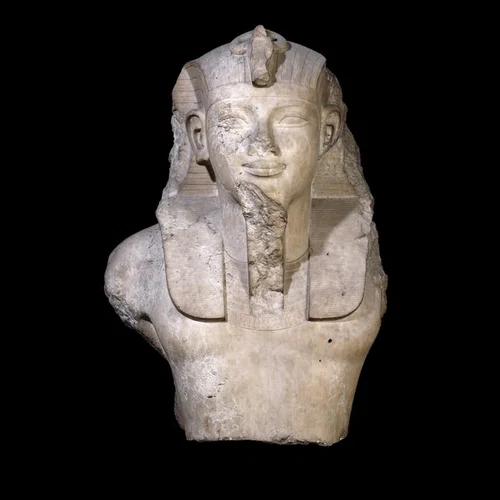
In terms of history, the Amarna Letters provide evidence that Jerusalem as a city was occupied in the 14th century, which according to Christopher Rollston, there was little evidence proving this. The letters also come a few hundred years before King David supposedly defeated the Jebusite population of Jerusalem and created his own capital. There were 6 letters discovered that were from Abdi-Hepa, ruler of Jerusalem written to King Pharaoh, pictured above. Abdi-Hepa protests his loyalty to King Pharaoh and requests extra troops to protect Jerusalem from his enemies (Armstrong, 13). Although King Pharoah did not send Abdi-Hepa reinforcements, this vouch for Jerusalem's importance is very important as there is very little other archeological evidence.
Armstrong, Karen. Jerusalem: One City, Three Faiths. 1st Ballantine Books ed. New York: Ballantine Books, 1997. Print.
Christopher Rollston, "Jerusalem in the Amarna Letters", n.p. [cited 13 Feb 2022]. Online: https://www.bibleodyssey.org:443/places/related-articles/jerusalem-in-the-amarna-letters


Comments
Post a Comment